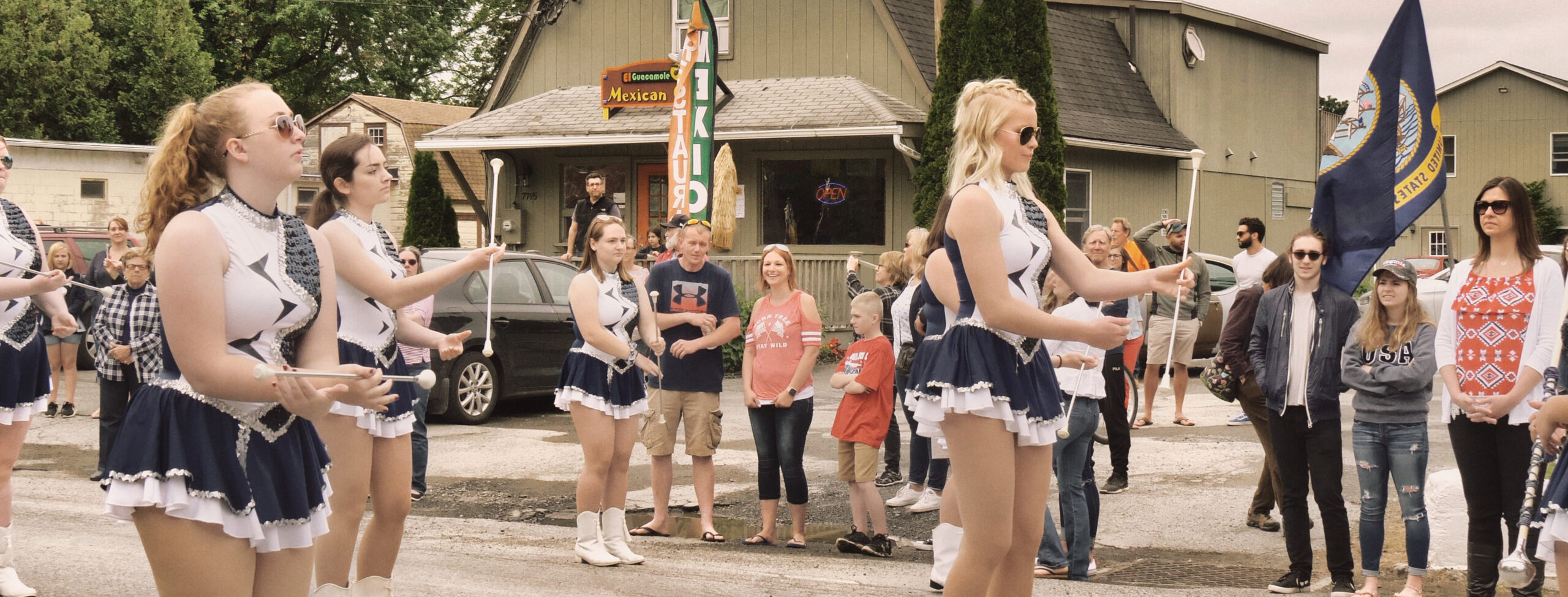

"Civil society is the web of relationships, institutions, and everyday gathering places — from the church supper to the little league board to the volunteer fire company — through which...
Read More
Democracy is a system of government in which power ultimately rests with the people, who exercise that power directly or through freely elected representatives.
Democracy is a conversation.
We tend to think of democracy as an idea that we learn in school that some of us practice every two or four years. It is often confused with personal liberty, offered up to justify a right, as in, “This is a democracy, so I have the right to ___________.”
Ideas can be inconvenient and put aside in order to “get things done.” But things put aside are things that can get lost and forgotten.
Neglecting democracy can allow a community to split into tribes. Tribalism encourages people to bond but not to bridge, to signal but not to communicate, to react but not to initiate. To turn a once-vibrant community into a ZIP code.
I created this website to define democracy in a non-political, non-polarizing way—through real, everyday-life video examples—drawing on my intertwined careers as a documentary filmmaker and organizational consultant.
In the 1970s, I explored the “blue collar blues” through documentary films, uncovering both causes and cures for workplace dissatisfaction. A Ford Foundation fellowship to UCLA’s Center for Quality of Work Life drew me out from behind the camera and into the world of participatory management and industrial democracy.
Democratizing the workplace and the wider society share much in common, yet their tone has differed: in politics, it has often been turbulent and adversarial, a zero-sum game, while in industry it offered benefits of collaboration, win-win. My goal is to bring the lessons learned on the shop floor to the public square.
Like a good brew, democracy is created from simple ingredients, close to home and often overlooked. It begins with public places where people from different walks of life can meet, mingle, and connect. Add a pinch of curiosity to spark conversation. Stir in leadership that invites participation rather than fears it. And finally, choose a place alive with diversity—where new people, new ideas, and new experiences flow in.
Together, let’s rediscover the social capital all around us and see how it can be transformed into a culture that supports democracy.
Let’s Make America Civil Again!
The Examples

The Birthplace
The theater of Dionysus in Athens, circa 500 BC, where 17,000 citizens could share the same experience. Now, THAT is social media! No wonder it was the birthplace of democracy.
Read More

The Potluck Jam
Every Monday, when the weather allows, people begin to emerge along the banks of the Hudson River in Kingston at stretch called The Strand.
Read More

The Bridgiest Bar in Town
Every Friday evening, we went to Lia's Mountain View for dinner, a drink, and lots of people. We preferred the tap room, around the U-shaoed bar. That's where you meet...
Read More

The Best Community
There's a saying, "The best future is the one you make." Here a community is joining together to make its own future.
Read More

Meat. Greet. Eat!
Another bridge, this one from city to country, brings the table to the farm. An example of events that bridge cultures as well as people.
Read More

The Anthropology of Food
I was asked by an professor at Vassar to recruit some local farmers to host students studying the anthropology of food. And this happened!
Read More

Burgers with the Herd
The cows dined on grass. The people dined on... cow... But it was a great bridging event.
Read More

The Ag Fair
Pine Plains has an active Future Farmers of America chapter. By supporting the FFA it supports agricultural education as well as its own traditions.
Read More

The High Schoolers Paint the Town
When I heard that the high school was going to send some kids out to some local businesses to decorate their windows for Halloween, I thought this would be a...
Read More

You Are There… Even when You’re Not!
What happens when a filmmaker who is also a group psychologist decides to put those two careers together and apply them to making community meetings more democratic.
Read More

The Last Night at the Wild Hive Cafe
A place where NOBODY knows ypur name -- at first and then you become friends.
Read More

It Takes a Play to Make a Community
We go behind the scenes (and scenery) to witness how, in the making of a play, a new community is also produced.
Read More

He Brought a South African Braai to a New York Town!
When Will Carter found out that some local children relied on the school lunch for food, and many went hungry on weekends, see what he did about it.
Read More


It Takes a Community to Run a Railroad
The story of the Catskill Mountain Railroad is one of historical preservation, local tourism, grassroots railroading and political intrigue. What a combination! Take a look at this movie before we...
Read More

What’s Car Racing Have To Do With It?
Trust in others... All the racing stewards are volunteers.
Read More

Small Town Battles A Global Pandemic
A pharmacikst got some volunteers togetrher to give Vaccinations.
Read More


Hangaring Out…
On weekends during the warm months the Rhinebeck Aerodrome hosts a public air show of antique planes; the real show is during the week when the volunteers work together to...
Read More
(more coming)